Sunday, March 6, 2022

The power of a name

 Dec 13 

The Leonidas Hamlin Kennard Sr Story. Chapter One.

The power of a name. I often think about what makes a person a person, and although a persons name does seem to play an important part in helping a person define themselves, I don’t believe that what we are is simply the name we were given at birth. or the name that people call us, or the name we call ourselves. I do believe; however, that names are largely responsible for defining the kind of people we become. If we let them, names can be keys to becoming something special. And unique. Names imbue their owners with virtue. One of my ancestors believed this just like I do.
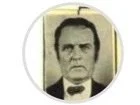
James R Kennard

James Kennard was born in Rushville, Susquehanna, Pennsylvania, and named for his father. Adult life took James from Pennsylvania and his family and lead him to Fairfield County Ohio, to another Rushville. The economy of Ohio was quickly transforming from one of agriculture to one of industry, and James the blacksmith answered the call to move west. It was there that he met his dear Elizabeth Ann Martin, they married and loved one another.

The couple had their firstborn, a daughter he named Harriet. Although the reason they named her Harriet isn’t recorded, Harriet means “home-ruler” in German. Names were so important to this well-read, Victorian-era family that they surely wanted their daughter to have the best life that could be conceived for a frontier woman.
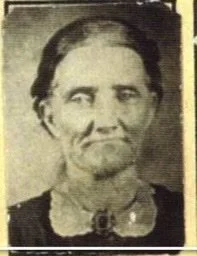
Elizabeth Ann Martin

James put such a large value in the name a person carried with them, that he had named his firstborn boy Samuel Hamilton after two of the fathers of liberty. Samuel Adams and Alexander Hamilton. Although Samuel was lost to the fever at 5, it didn’t shake his parents’ faith that God would provide another angel from heaven for them to love. I’m sure James would have been swept west by the forces that drove him to Ohio, but he had to bury his oldest son in Fairfield County Ohio, and it was there that he stayed. They didn’t stray far, but James did periodically move around the county, looking for opportunity and a way of life. And while they did that the family grew.
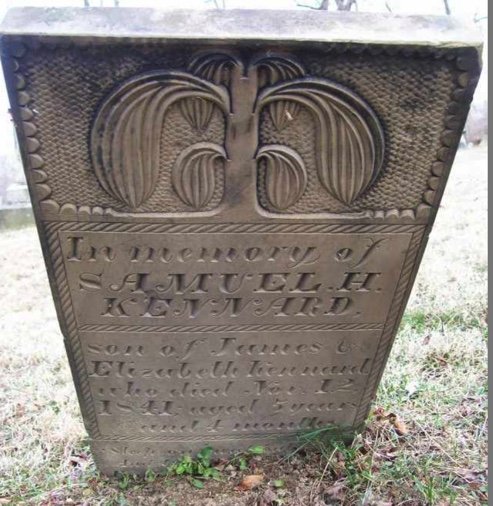
Samuel Kennard Headstone.

When the creator rewarded their faith with another boy, they named him for James’ grandfather who fought as a corporal in the New Jersey Militia during the Revolution. And they cleverly also named him for the Reverend John Wesley in hopes that their boy would love God with all his heart, mind, soul, and strength. And to love his neighbor as himself. The ritual of naming a child was not meant to be a magical infusing of power and virtue into the baby. It was, however a practiced and familiar ritual which they believed would give the treasure of a good name to their children. It would be a gift that would help them carry on in the troubled world they had brought them into.

Children were the source of joy for this growing family. When their fourth child joined them, they wanted her to have the virtue of the mother of God, so she was named Mary. They added Jane to her name since Jane is thought to be derived from the Hebrew name Yochanan which means ‘Yahweh is beautiful’ and they were so filled with gratitude for this new blessing.

James admired the King Leonidas of Sparta, who led a desperate defense against the raging hordes of Xerxes the first. Leonidas made his stand at Thermopylae, and when the Persians could not get past the Spartan barricade, the Persian messenger invited Leonidas to surrender saying that they would unleash so many arrows that it would darken the sky above the Spartans. The messenger who bore those dark tidings returned to Xerxes with a message that contained a simple reply.

“So Much the Better, we shall fight in the shade”
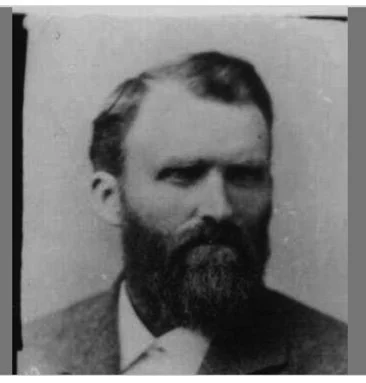
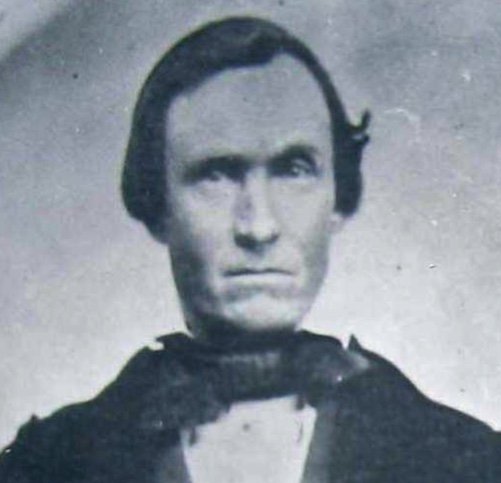
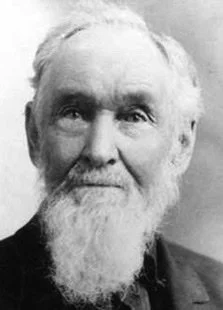
Leonidas H Kennard as a young man

James understood like Leonidas of Sparta, that we all have our dark days and that the shade of overwhelming opposition is sometimes the only place where we can put up a fight for justice.  And although the Spartans died defending that pass, their sacrifice saved their country. James wanted to give his fifth child that courage, character, and personality in hopes that it would carry him through life.

So his next sons name was Leonidas, for his given name he was reminded of strength and courage, and his middle name was Hamlin, after his parent’s preacher, to remind him of his duty to God.

Having been given the name Leonidas Hamlin. The baby boy was ready to face the world with courage and faith,

This isn’t the story of revolutionary war veterans or world-renowned religious reformers; this is also not the story of Spartan kings who died in courageous battle. This isn’t James’s story, the story of many of his children isn’t being told either. This is the story of a man who caught the wanderlust, reformed his religious feelings, and died a noble death as a patriarch to thousands. He was a schoolteacher, farmer, lay-preacher. And many more things. This is the story of Leonidas Hamlin Kennard.

Courage and faith were needed right from the beginning, Leonidas, or Lon as he was called, was sick for the first four years of his life. His mother’s sister, Aunt Margaretta, stepped up when the local doctor of Vinton County Ohio had given up on the sick baby. The doctor decided not to devote any more precious medicine to yet another sick child. Margaretta was Lon’s first hero. She had training as a nurse and her love and devotion saved the boy.

Not before the effects of the sickness caused Periodontal Disease which then led to two rotten teeth falling out with a part of his jaw, the scar that was left would impact the boy enough that he would later write. “I was so bad that I lost two teeth that came out with Rotten flesh and part of my jawbone. Nearly eating a hole through my lip and left an ugly scar which spoiled my mustache.”


A note here, a trait that must be genetically inherited is demonstrated here. Lon faced a life-time of physical deformity and devoted one sentence about it in his Autobiography. I actively fight the urge to ignore the big, messy, traumatic parts of my life. i witnessed a car accident and nearly died on my LDS Mission, and I wrote a letter home later that didn’t even mention it. We Kennards tend to avoid drawing attention to ourselves. and Lon is no exception, which is a big reason why I am giving him extended treatment here.


He healed and was eventually expected to attend school in Mount Pleasant Ohio, where his family lived, even if it wasn’t a daily occurrence. School was tedious for the young and adventurous Kennard. Unfortunately, there are not many accounts of the things he preferred to do with his time instead, but as one of his descendants, I can say with a certainty that he was off fighting Monsters, or defending his homeland from Xerxes, or any other thing that his young mind found more interesting than attending school. But school and work occupied most of his time as a child.
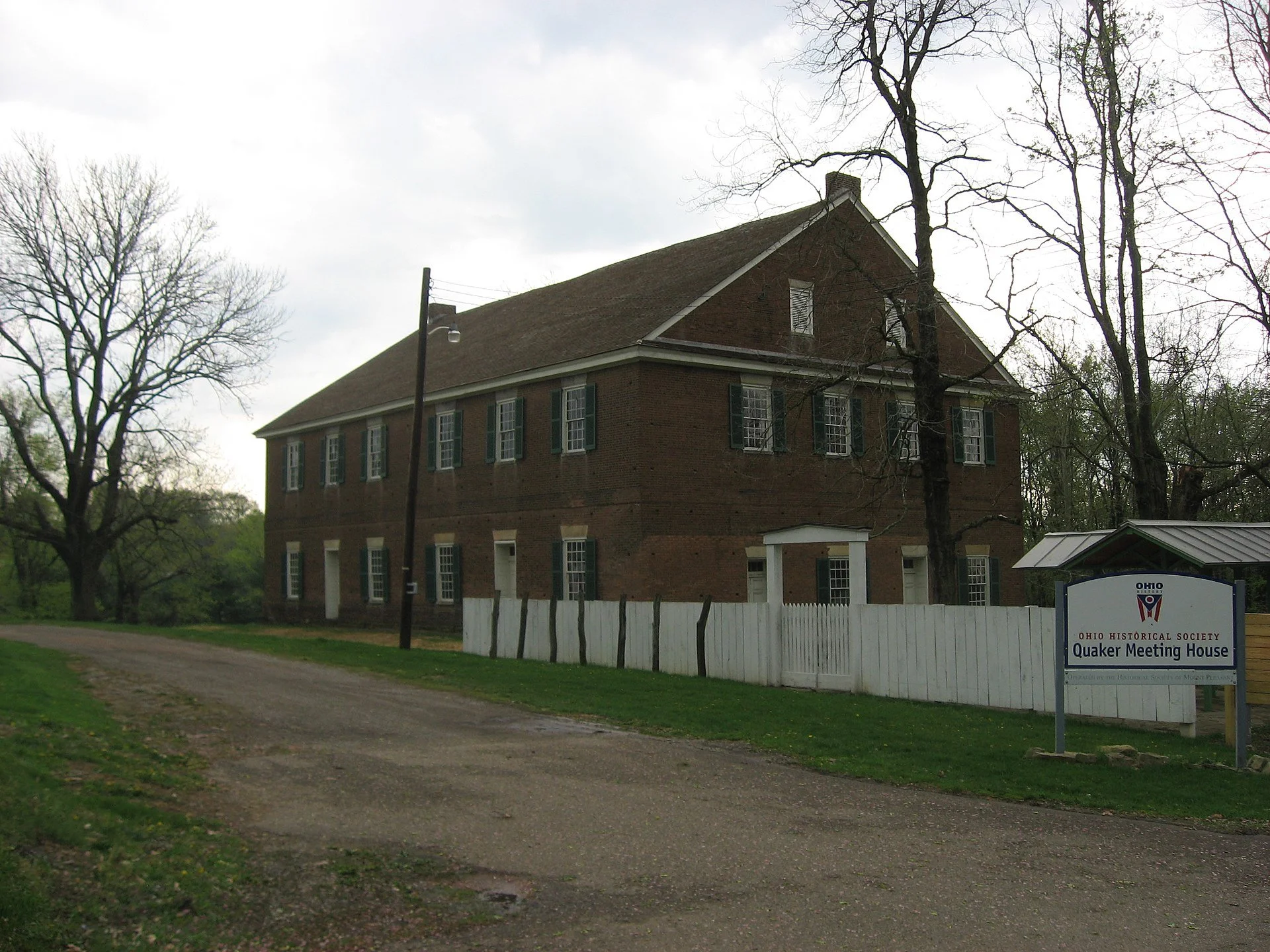
Quaker Meeting House, Mt Pleasant Ohio.

In a time when no one had time to care about the mental growth of a child, one man shines through the mists of time and forgotten memories as one who did care about Lon. John Chillicote. It has been said many times, at least once on this blog, that a person dies twice, once when they are burry that person in the ground and once when that person’s name is last spoken.

John Chilicote is a name so common that it has been uttered millions of times. But no census record of a John Chilicote teacher of Mount Pleasant Ohio can be easily found, which isn’t surprising given the nature of the demographics of Ohio at the time. But in 1850, there was a John Chilicote who lived near Lon and his family. It is said this John was a farmer, so if this is “the” John Lon remembers, the John who cared about Lon enough that 80 years later while recalling him his name was the only name to appear from that time. If this was the John who taught the children of Mount Pleasant, while also farming the land trying to produce some fruit. Then this John deserves to be remembered, this John sacrificed his time to make sure that children learned and grew. Let him not be forgotten.

Mr Chilicote, and a variety of other teachers, helped Lon live a life of learning and literacy. He could never recall a time where he couldn’t read. Also, Lon lived a life of Adventure and influence. which started as he made pretend with his cousin Henry Johnson fighting off the evil invading rotten wood logs. they went about “Thrashing Cabbages.” The two Cousins were probably each others earliest friends and Lon remembers creating toys and tools and worlds of fun with Henry as some of his earliest memories.

Henry Died in 1863, around the time that the Spirit of the Soldier inside Leonidas manifested himself, and Leonidas Joined the Army of the Ohio. in the war of the Rebellion.

Inspiriation

Guest Writer Series part 2

Inspiration; For an athlete, it’s finding a way to use another’s example to better oneself, to dig deeper, to excel because of what others have done before. For an artist, it’s discovering the unseen, the unknown, the hidden and creating something new. The same word applies for both...in some ways the words mean different things, but in many ways, it means exactly the same.

Inspiration is something supposedly that was always there, but invisible until acted upon.

Since I’m no longer an athlete (it’s debatable that I ever was), I seek inspiration in artistic endeavors, writing, photography, performing. Sitting in front of a keyboard waiting for the muse to descend from on high, taking a walk to see if the light will cooperate and when it does knowing when to click the shutter. But, inspiration comes from other sources as well.

For me, it comes in the form of my father.

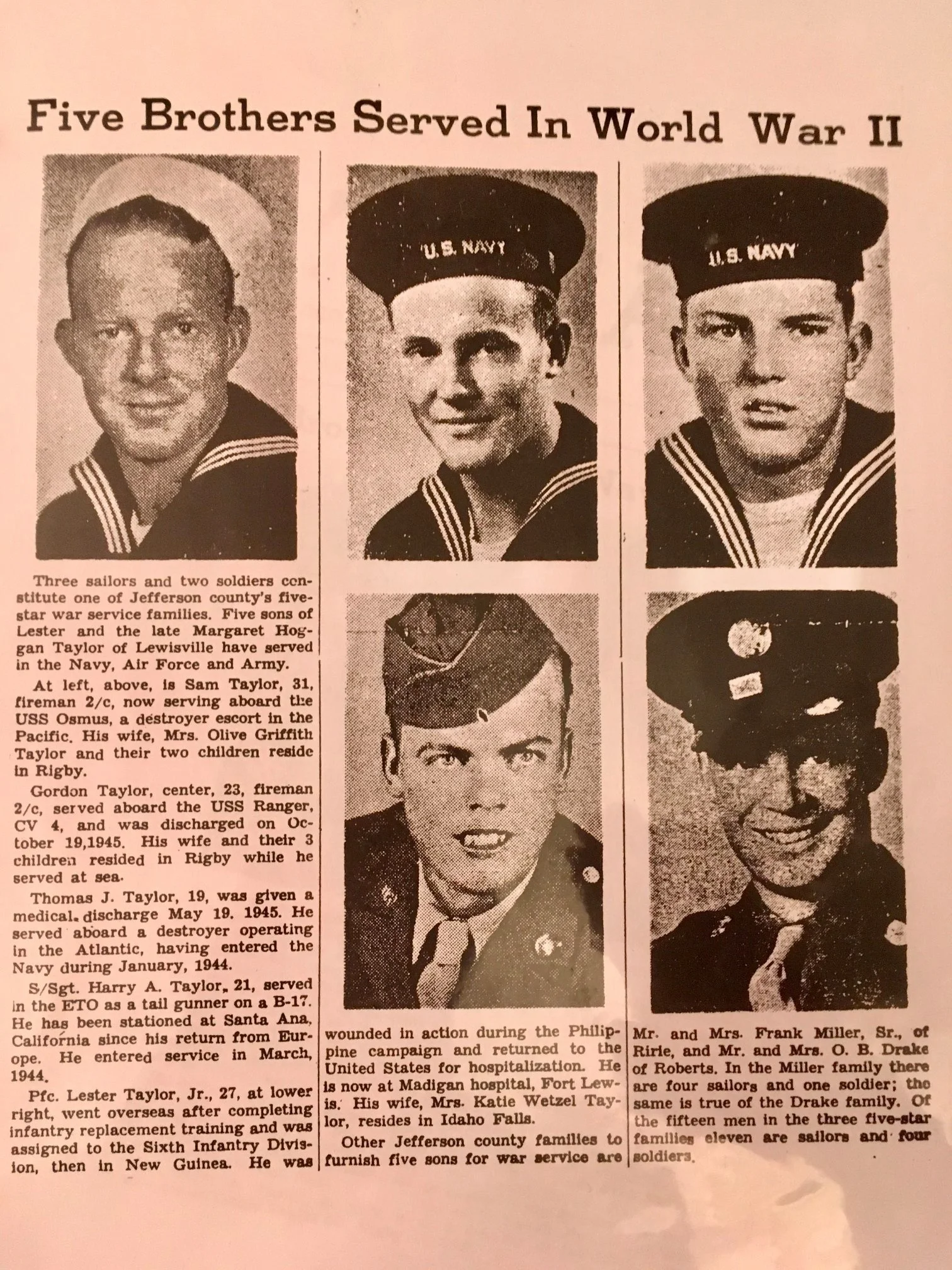
Scott Taylors father and his Uncles. Scott says “all came home, all are gone now.”

As I grow older, the respect for the man I called “Dad” increases. I look at my own life and compare it to his. It’s an unfair comparison, really. It would take several lifetimes of experiences for me to come close to his. I am, in a word, a rookie when it comes to challenges, accomplishments, overall awesomeness.

My father was born in 1924. If you’re familiar with the first half of the twentieth century in America you know that a child born in the 1920s will face a world of incredible advancements and overwhelming hardships. In a few years the country would plunge into a Great Depression, followed by another world war. My father experienced both in an intimately personal way.

My father had eleven siblings, he being number nine. Before he turned five years old The Great Depression hit leaving a poor farmer family in Idaho to struggle for survival. It was in his youth my father learned to shoot and shoot well. I recall a story from a cousin that said he and my father were out in the fields when they spotted two geese flying high overhead. He said my father--a teenager at the time--spotted the birds, tracked them with his rifle, and shot. One fell. It served as the family’s dinner that night. It brought home the fact that my father had to be a good shot or they didn’t eat. At no time ever in my life have I depended on such skills to feed myself or my family.

photo credit- Scott Taylor

Only a few years later my father found himself in Europe as part of a B-17 bomber group during World War II. Because of his shooting skills, he was place in the back of the plane as a tail gunner...the most dangerous position on the team. I was told by a veteran who knew much more than me of such things, that the life expectancy of a tail gunner when engaged by German fighter planes was five minutes. Those speedy enemy aircraft would fly directly behind the big slow lumbering B-17s and shoot up everything, especially the tail gunner position.

Like The Great Depression, my father survived the war. He was one of four siblings who served and returned from that terrible war. He came home and became a police officer. Eventually he met and married my mother and attended Utah State University where he earned his four-year engineering degree in only three years. 

When my parents were unable to have children of their own, they adopted three children, me being the middle child. With a larger family, my parents purchased land in Farmington, Utah and my dad began building a house. And when I say “build” I mean he built it. He poured the footings. He framed it. He bricked it. He built and installed the heating ducts. He wired the home. He install all the plumbing. He even built the home’s television set. He did it all.

The only thing it seemed he could not overcome was cancer.

My father passed away nine months shy of his fiftieth birthday, leaving a widow and three children under eleven years old. I grew up knowing more of the man than the man himself. 

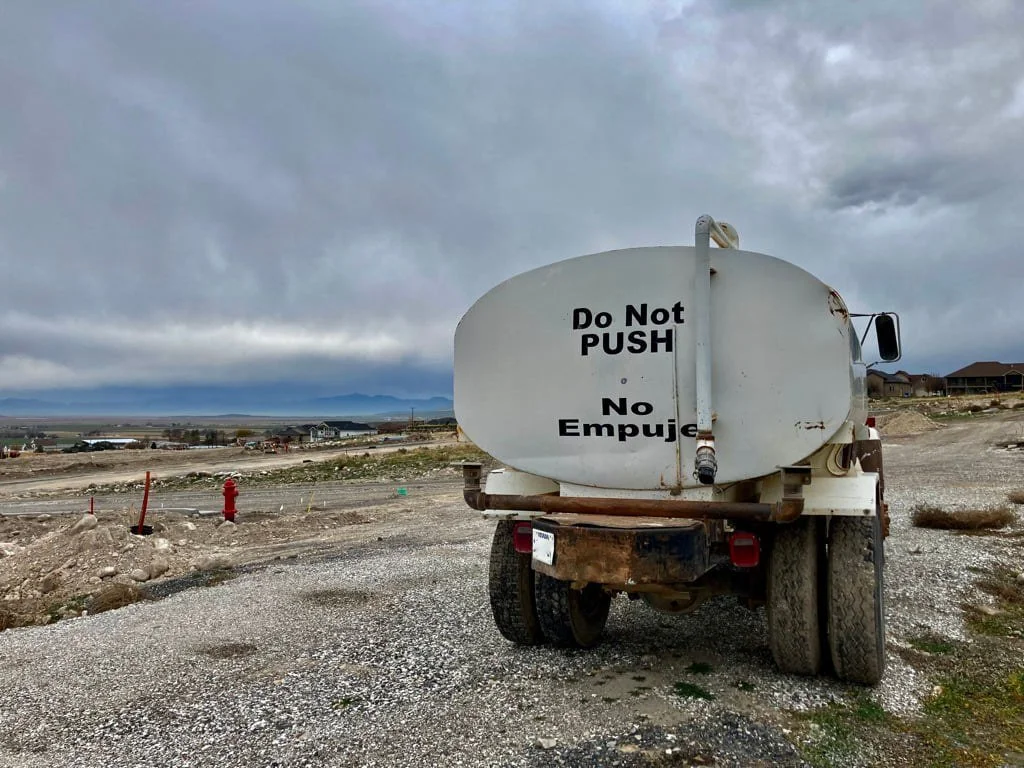
Scott will regulary share pictures from his daily life, this is one he captioned “Do not Push, No Empuje”

Six years ago, I surpassed my father in days on this earth. As I’ve grown, married, and had a family of my own, my father’s life inspires me...the way he provided for his siblings as a young man, the way he put his life on the line to protect others in the war and as a police officer, the way he studied hard in school and provided for his family. And the longer I live, the more impressed and inspired by his example.

As stated earlier, inspiration can come from a living person who inspires by example. Inspiration can also come from someplace else, someplace unseen that manifests to the recipient as if from above. For me, the inspiration I feel from my father is both. Though no longer with us, his example will always be an inspiration. And with him gone, sometimes I sense his presence.

There are times, when creating, I search for help. I seek out the next step, the next chapter of the story. In life I find myself searching for help for that next chapter. I am thankful I can look to a man I find so inspiring. I can also feel that help from the unseen, from beyond.

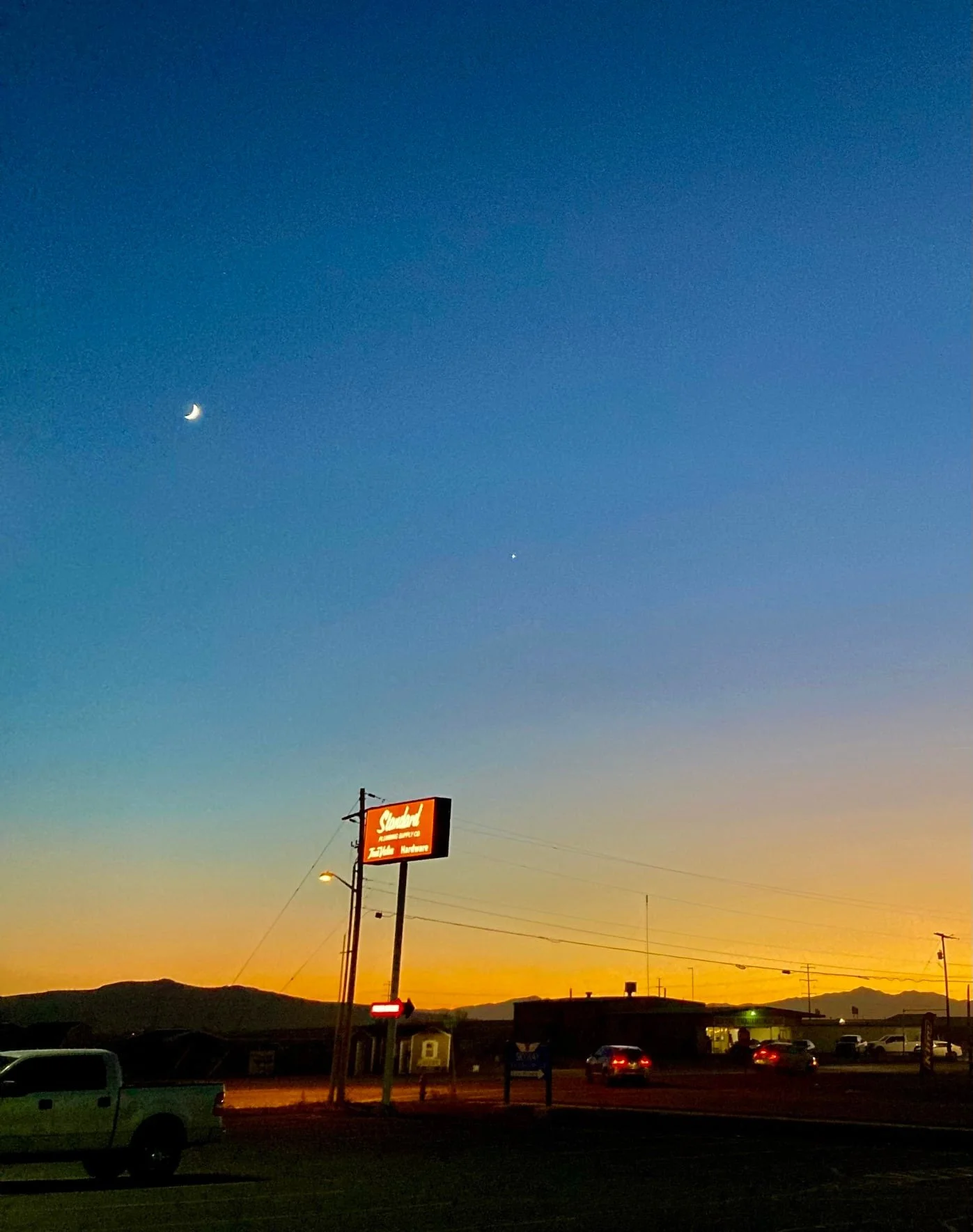
“Moon Over Standard Plumbing Supply Company”- Scott Taylor

Scott is a skilled writer who is one of the sources of inspiration for this blog. if you enjoyed this post, check out his blog at https://scottywattydoodlealltheday.blogspot.com/ or you can read one of his books “Speckled” by clicking the “shop now” Link below 

Grief Gives Way to Joy

 Dec 27 

The Leonidas Hamlin Kennard Story Chapter Two.

John S Gleason as a younger man

John S Gleason was stricken with grief, a grief that only his faith in God could heal. On the 17th of November 1845 his sister Esther died of a terrible sickness. In some correspondence with his brother, John doesn’t name the disease that acted as the Killer of their beloved sister, but does say that he had a child who died of something he called “the Canker” which is likely a form of scarlet fever with ulcerations or putrid sore throat.

Physician and educator William Andrus Alcott described the condition as “a very troublesome disease,” not infrequently fatal. “Physicians dread it almost as much as they do the small-pox.” Symptoms included chills, fever, sore throat, and a skin rash. Treatment included bed rest, “cooling drinks given freely,” “abstinence from animal food,” or a cold compress. Given his closeness with Esther, I’m sure she contracted this plague, but none of the available treatments could alleviates Esther’s suffering.

In just four short days of incredible misery, Esther was so prepared to give up the ghost that she did so without even a death rattle. From Wednesday to Friday her state declined and even the best Doctors available to her and John could do nothing but thank God for the end of her suffering.

In remembrance of her, John says to his brother Alvirus “Her death was greatly lamented by the whole circle of her acquaintance. She had gained the esteem of all who knew her and to me as a sister she was doubly endeared in consequence of her having borne me company in a land of strangers as a near and a dear friend in whom I could place the utmost confidence and who tenderly felt for my welfare in times of my deepest afflictions, neither did she ever forget her aged father, her brothers and sisters of whom she frequently spoke in terms of the warmest affection. She always had a great desire to see you all once more, but she has been deprived of that privilege.”

John S Gleason’s Nauvoo house.

In January of 1846, the thriving town of Nauvoo Illinois, formerly Commerce, was suffering and John Streator Gleason suffered right along with it. eight years before, John was a tall muscular and kindly man who, like me experienced a great deal of Anxiety over those he loved. I can emphatically say that anxiety manifested itself in sleepless nights and thoughtful letters that came forward anytime John became aware of a pain or hardship his loved ones were suffering.  

Just a few years before the suffering of Nauvoo and the Gleason clan started In the spring of 1844 Johns first child was born, a boy named for his father.  That same time the town became a thriving center for human experience, with a population nearing 12,000 which is said to have rivaled Chicago’s population at the time. In June of that year Joseph Smith Junior and his brother Hyrum, the leaders of the town, and the leaders of the faith which built that town out of the swamp and held up its society and bounty, were killed by a mob of angry locals. A. few short months later John Jr. died in infancy.

The description given of him matches me so perfectly that as one of his descendants I can say John was inclined to put the feelings of others well before his own. He was inclined to indulgences before he converted to Mormonism. He was likely popular with the ladies and had a vibrant social life. John met a prominent Mormon named Isaac Chase and sometime after being converted to Chases faith, John Married his daughter Desdemona.

After their marriage Desdemona remained on her father’s estate and John went to preach his newfound gospel to anyone who would hear, traveling through the Eastern united states and parts of Canada. Time and effort and circumstance brought John back to the City Nauvoo. A thriving metropolis of its time built out of the swamps of the Mississippi river. It was there that he joined the Nauvoo legion, and it was there he proved his loyalty to the man he held as prophet, Brother Joseph. John was imprisoned carrying out the prophets’ orders to destroy the Nauvoo expositor, and he was prepared to die for the cause he thought to be the lords. But that was not what God asked of him. some days after the printing press was destroyed, but before Joseph smith and his brother Hyrum were murdered in cartage jail, John was freed from prison and went to be with his family in terrible time for their faith.

scene depicting the murder of Joseph Smith Jr.

In a lengthy letter to his brother, John says, “the scenes through which I have been called to pass since I arrived at this place from the east has almost alienated me from my country, almost one continual round of mobocracy by night and by day.”

“When I contemplate the scenes, it almost makes me shudder and my blood run cold in my veins. I have been an eyewitness to almost the whole thing. My life has been exposed and threatened from time to time by the mob. I once went into their camp when they were filled with wrath and came at me to destroy me. But I was saved by God’s hand. On that day the mob did not lay their hands on us but took every course they could to terrify us. But I reckon they did not make out much, for when they showed their bowie knives to us, I showed them my pistols and what other arms I was able to secret away that we had with us.”

“If I could see you, I could tell you all about it, but cannot now commit to paper suffice it to say that I was liberated. this was about a week before the assassination of the prophets Joseph and Hyrum Smith, who were arrested and marched to jail by a band of the desperados and the brothers could not even lay there in peace.”

John S Gleason

Before the long arduous journey to the Salt Lake valley, that many Mormons would take to escape the Mob violence that plagued them. John wrote the letter we have been referring too. He wrote it to the brother he thought most likely to receive it. In it he expresses some deep feelings

“I am left alone without a brother or a sister with me to rejoice at my prosperity or lament and sorrow at my adversity. I feel that I am quite alone singled out of my father’s family. I wish that you or Oliver or both of you was here to go. The anxiety I have about you all is indescribable. There are Alvira and Betsey and Angeline and Armenia and our aged father, though mentioned last, he is not least in the feelings I have for home. He has nourished me and in the days of my infancy dangled me on his knee. Oh dear, my bosom beats with anxiety about you while I write. I could say like the prophet of old, does my father yet live, shall I see him again in the flesh, our father who must if alive be bowed down with age.”

I do not know if John got to see his father again, but I know he became a father to many. his life does not erase the sorrow and grief of his lost sister, or murdered friend. but he did find companionship, peace, and love. in spite of his pain.

In time John joined the company that lead Mormons into the Utah valley with Brigham young and began to lay provisions for his family before returning for them the following spring. He helped settle various parts of Salt Lake before settling for some time in Farmington Utah. Just three years after Utah became a territory of the United States. It was at this time that Joanna Louisa was born. The woman who would later Join Leonidas in Marriage, although Lon was just now starting to notice the fancy new desks at his school in Ohio.

Make Your Mark

 Feb 14 

The Leonidas Hamlin Kennard Story Part 3

Leonidas Joined the war but before he did, he says he “enjoyed all the sports of boys at that time.” and lists among them fishing, swimming, wrestling and tussling in which he says he could “hold his own.” he made whistles with his father’s apprentice Enoch Martin. 

He was a boy. Perfectly imperfect in every way, his brother John once shot a squirl when they were hunting, and Lon decided he needed to retrieve the kill from out of the tree and in doing so he fell and struck his head getting five stitches. On another occasion he was attempting to split some wood and his axe slipped, he says that he cut his left-hand thumb and forefinger. Making those fingers remain stiff for the rest of his life. Regarding this chapter of his life, he said “I had many cuts and bruises incident to youth.”

He tried to go to school, and he tried to like it, he wasn’t always successful at either endeavor. He joined his school’s lyceum, or performance hall. If his descendants represent him at all, it is likely he had a sweet singing voice and wasn’t afraid to use it 

A trait of many boys is that they want to make their mark. The philosopher Earnest Becker says, “Man cannot endure his own littleness unless he can translate it into meaningfulness on the largest possible level.” many times in my life I have felt a burning desire to stamp “Robert was here” right into the history books. In a way that no one could ignore. Seeing Barrack Obama take office when I was 18 inspired me and millions of others that we could make a lasting impact, If we really wanted too.

Four generations earlier, in the summer of 1861, Lon sat with his friends overlooking the sprawling camp of the 18th regiment of the Ohio infantry, a volunteer regiment and the same feeling likely possessed him. But in true Kennard fashion he does not express his feeling in his autobiography. Rather, he says that he suggested to his friends they return the next day and enlist. They Would be foregoing the safety and security of college, in order to go on an adventure. 


Although he would have been 19, he was a boy before enlisting. He provided evidence of this in his Autobiography.


“The first night in camp I was a little tired and sleepy and asked some of the boys to awaken me at 9’ o’clock roll call. They promised to do it, so I lay down and went to sleep and missed roll call. In the morning captain Finton asked me where I was last night, I said in the bunk asleep. He said, “you take that brush and sweep quarters for two hours.” I did the extra duty, but it was a good lesson and the last time I asked anyone to wake me up. I learned to depend on myself I have never regretted that two hours of extra duty.”

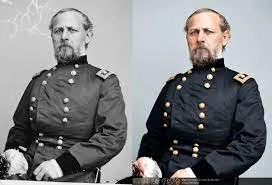
Don Carlos Buell

Leonidas and his friends were pawns in General Don Carlos Buell’s game during that spring. Buell was a less-than experienced union general with something to prove. Buell was ordered to aid Grant who was under siege in Tennessee. Leonidas stood as a member of the newly formed army of the Ohio, which was described as “barely discipline rabble.” A fact clearly illustrated by the store above.

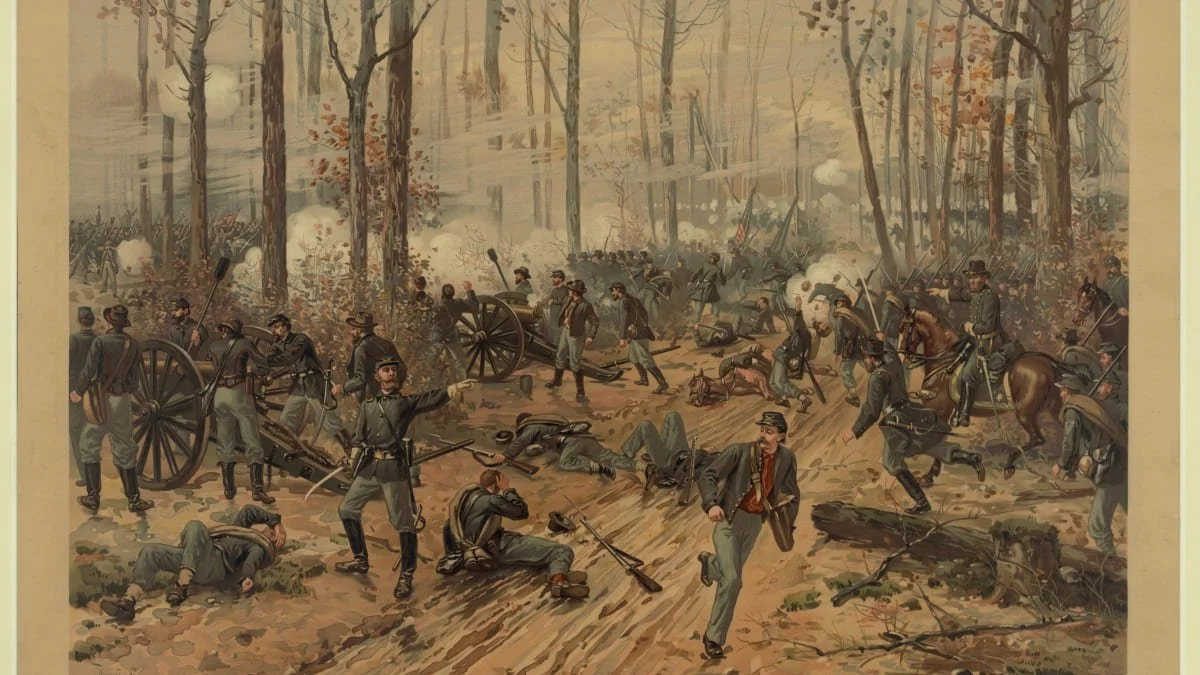
Leonidas, along with the rest of the Army of the Ohio was ordered to reinforce Grant's Army of the Tennessee, which was encamped next to the Tennessee River that April. On April 6, the Confederates began a surprise attack on Grant and his army, That attack began one of the bloodiest battles of the Civil war. Leonidas does not recount much before this, he says “from Louisville we marched to Nashville Tennessee, the confederates retreating before us. Very little fighting. In the advance were some skirmishing.” after some sickness and a lot of marching, Leonidas and the 18th volunteer infantry of the Ohio arrived at the battle of Shiloh.