Showing posts with label entropy. Show all posts

Sunday, March 6, 2022

Grief Gives Way to Joy

 Dec 27 

The Leonidas Hamlin Kennard Story Chapter Two.
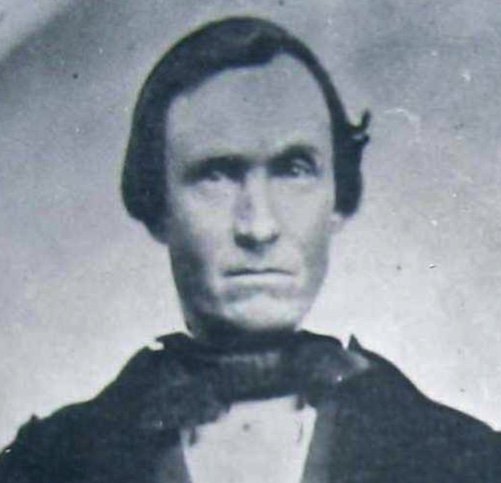
John S Gleason as a younger man

John S Gleason was stricken with grief, a grief that only his faith in God could heal. On the 17th of November 1845 his sister Esther died of a terrible sickness. In some correspondence with his brother, John doesn’t name the disease that acted as the Killer of their beloved sister, but does say that he had a child who died of something he called “the Canker” which is likely a form of scarlet fever with ulcerations or putrid sore throat.

Physician and educator William Andrus Alcott described the condition as “a very troublesome disease,” not infrequently fatal. “Physicians dread it almost as much as they do the small-pox.” Symptoms included chills, fever, sore throat, and a skin rash. Treatment included bed rest, “cooling drinks given freely,” “abstinence from animal food,” or a cold compress. Given his closeness with Esther, I’m sure she contracted this plague, but none of the available treatments could alleviates Esther’s suffering.

In just four short days of incredible misery, Esther was so prepared to give up the ghost that she did so without even a death rattle. From Wednesday to Friday her state declined and even the best Doctors available to her and John could do nothing but thank God for the end of her suffering.

In remembrance of her, John says to his brother Alvirus “Her death was greatly lamented by the whole circle of her acquaintance. She had gained the esteem of all who knew her and to me as a sister she was doubly endeared in consequence of her having borne me company in a land of strangers as a near and a dear friend in whom I could place the utmost confidence and who tenderly felt for my welfare in times of my deepest afflictions, neither did she ever forget her aged father, her brothers and sisters of whom she frequently spoke in terms of the warmest affection. She always had a great desire to see you all once more, but she has been deprived of that privilege.”
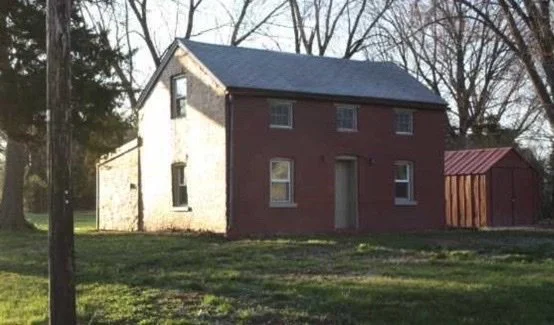
John S Gleason’s Nauvoo house.

In January of 1846, the thriving town of Nauvoo Illinois, formerly Commerce, was suffering and John Streator Gleason suffered right along with it. eight years before, John was a tall muscular and kindly man who, like me experienced a great deal of Anxiety over those he loved. I can emphatically say that anxiety manifested itself in sleepless nights and thoughtful letters that came forward anytime John became aware of a pain or hardship his loved ones were suffering.  

Just a few years before the suffering of Nauvoo and the Gleason clan started In the spring of 1844 Johns first child was born, a boy named for his father.  That same time the town became a thriving center for human experience, with a population nearing 12,000 which is said to have rivaled Chicago’s population at the time. In June of that year Joseph Smith Junior and his brother Hyrum, the leaders of the town, and the leaders of the faith which built that town out of the swamp and held up its society and bounty, were killed by a mob of angry locals. A. few short months later John Jr. died in infancy.

The description given of him matches me so perfectly that as one of his descendants I can say John was inclined to put the feelings of others well before his own. He was inclined to indulgences before he converted to Mormonism. He was likely popular with the ladies and had a vibrant social life. John met a prominent Mormon named Isaac Chase and sometime after being converted to Chases faith, John Married his daughter Desdemona.

After their marriage Desdemona remained on her father’s estate and John went to preach his newfound gospel to anyone who would hear, traveling through the Eastern united states and parts of Canada. Time and effort and circumstance brought John back to the City Nauvoo. A thriving metropolis of its time built out of the swamps of the Mississippi river. It was there that he joined the Nauvoo legion, and it was there he proved his loyalty to the man he held as prophet, Brother Joseph. John was imprisoned carrying out the prophets’ orders to destroy the Nauvoo expositor, and he was prepared to die for the cause he thought to be the lords. But that was not what God asked of him. some days after the printing press was destroyed, but before Joseph smith and his brother Hyrum were murdered in cartage jail, John was freed from prison and went to be with his family in terrible time for their faith.

scene depicting the murder of Joseph Smith Jr.

In a lengthy letter to his brother, John says, “the scenes through which I have been called to pass since I arrived at this place from the east has almost alienated me from my country, almost one continual round of mobocracy by night and by day.”

“When I contemplate the scenes, it almost makes me shudder and my blood run cold in my veins. I have been an eyewitness to almost the whole thing. My life has been exposed and threatened from time to time by the mob. I once went into their camp when they were filled with wrath and came at me to destroy me. But I was saved by God’s hand. On that day the mob did not lay their hands on us but took every course they could to terrify us. But I reckon they did not make out much, for when they showed their bowie knives to us, I showed them my pistols and what other arms I was able to secret away that we had with us.”

“If I could see you, I could tell you all about it, but cannot now commit to paper suffice it to say that I was liberated. this was about a week before the assassination of the prophets Joseph and Hyrum Smith, who were arrested and marched to jail by a band of the desperados and the brothers could not even lay there in peace.”
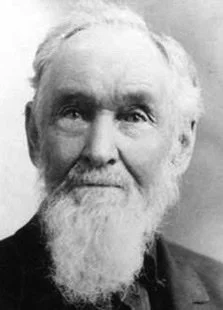
John S Gleason

Before the long arduous journey to the Salt Lake valley, that many Mormons would take to escape the Mob violence that plagued them. John wrote the letter we have been referring too. He wrote it to the brother he thought most likely to receive it. In it he expresses some deep feelings

“I am left alone without a brother or a sister with me to rejoice at my prosperity or lament and sorrow at my adversity. I feel that I am quite alone singled out of my father’s family. I wish that you or Oliver or both of you was here to go. The anxiety I have about you all is indescribable. There are Alvira and Betsey and Angeline and Armenia and our aged father, though mentioned last, he is not least in the feelings I have for home. He has nourished me and in the days of my infancy dangled me on his knee. Oh dear, my bosom beats with anxiety about you while I write. I could say like the prophet of old, does my father yet live, shall I see him again in the flesh, our father who must if alive be bowed down with age.”

I do not know if John got to see his father again, but I know he became a father to many. his life does not erase the sorrow and grief of his lost sister, or murdered friend. but he did find companionship, peace, and love. in spite of his pain.

In time John joined the company that lead Mormons into the Utah valley with Brigham young and began to lay provisions for his family before returning for them the following spring. He helped settle various parts of Salt Lake before settling for some time in Farmington Utah. Just three years after Utah became a territory of the United States. It was at this time that Joanna Louisa was born. The woman who would later Join Leonidas in Marriage, although Lon was just now starting to notice the fancy new desks at his school in Ohio.

Make Your Mark

 Feb 14 

The Leonidas Hamlin Kennard Story Part 3

Leonidas Joined the war but before he did, he says he “enjoyed all the sports of boys at that time.” and lists among them fishing, swimming, wrestling and tussling in which he says he could “hold his own.” he made whistles with his father’s apprentice Enoch Martin. 

He was a boy. Perfectly imperfect in every way, his brother John once shot a squirl when they were hunting, and Lon decided he needed to retrieve the kill from out of the tree and in doing so he fell and struck his head getting five stitches. On another occasion he was attempting to split some wood and his axe slipped, he says that he cut his left-hand thumb and forefinger. Making those fingers remain stiff for the rest of his life. Regarding this chapter of his life, he said “I had many cuts and bruises incident to youth.”

He tried to go to school, and he tried to like it, he wasn’t always successful at either endeavor. He joined his school’s lyceum, or performance hall. If his descendants represent him at all, it is likely he had a sweet singing voice and wasn’t afraid to use it 

A trait of many boys is that they want to make their mark. The philosopher Earnest Becker says, “Man cannot endure his own littleness unless he can translate it into meaningfulness on the largest possible level.” many times in my life I have felt a burning desire to stamp “Robert was here” right into the history books. In a way that no one could ignore. Seeing Barrack Obama take office when I was 18 inspired me and millions of others that we could make a lasting impact, If we really wanted too.

Four generations earlier, in the summer of 1861, Lon sat with his friends overlooking the sprawling camp of the 18th regiment of the Ohio infantry, a volunteer regiment and the same feeling likely possessed him. But in true Kennard fashion he does not express his feeling in his autobiography. Rather, he says that he suggested to his friends they return the next day and enlist. They Would be foregoing the safety and security of college, in order to go on an adventure. 


Although he would have been 19, he was a boy before enlisting. He provided evidence of this in his Autobiography.


“The first night in camp I was a little tired and sleepy and asked some of the boys to awaken me at 9’ o’clock roll call. They promised to do it, so I lay down and went to sleep and missed roll call. In the morning captain Finton asked me where I was last night, I said in the bunk asleep. He said, “you take that brush and sweep quarters for two hours.” I did the extra duty, but it was a good lesson and the last time I asked anyone to wake me up. I learned to depend on myself I have never regretted that two hours of extra duty.”

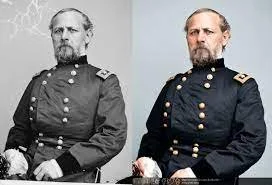
Don Carlos Buell

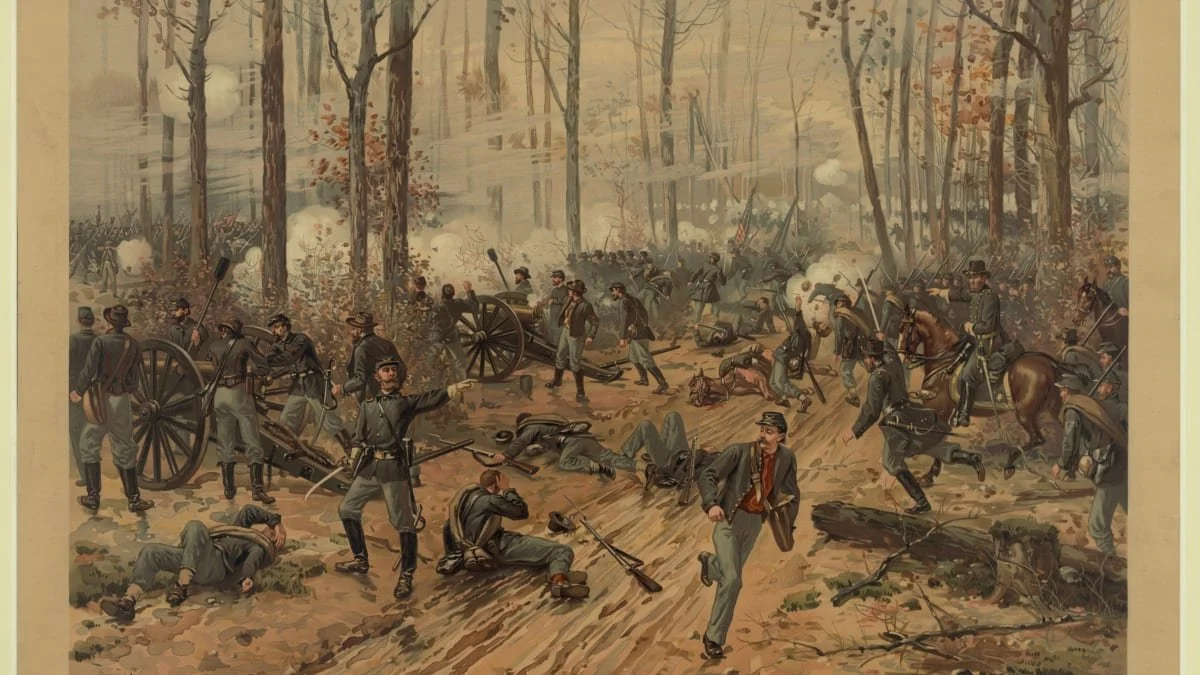
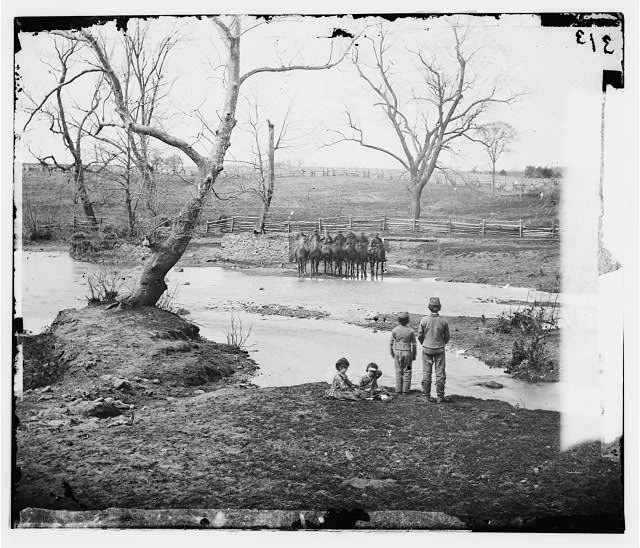
Leonidas and his friends were pawns in General Don Carlos Buell’s game during that spring. Buell was a less-than experienced union general with something to prove. Buell was ordered to aid Grant who was under siege in Tennessee. Leonidas stood as a member of the newly formed army of the Ohio, which was described as “barely discipline rabble.” A fact clearly illustrated by the store above.

Leonidas, along with the rest of the Army of the Ohio was ordered to reinforce Grant's Army of the Tennessee, which was encamped next to the Tennessee River that April. On April 6, the Confederates began a surprise attack on Grant and his army, That attack began one of the bloodiest battles of the Civil war. Leonidas does not recount much before this, he says “from Louisville we marched to Nashville Tennessee, the confederates retreating before us. Very little fighting. In the advance were some skirmishing.” after some sickness and a lot of marching, Leonidas and the 18th volunteer infantry of the Ohio arrived at the battle of Shiloh.


Tuesday, October 13, 2020

little bird, life and death

 In my corner of the world, in the beginning moments of the day, the sun starts to sort of wake up, and rub the sleep out of its eyes. Our star then starts to stumble around in the east as if in search of a pair of clean pants to wear, then finally after about an hour of early morning struggle it then shows it face over the crest of the Rocky mountains. It is under the shadow of these mountains that I first learned what death was. 

Though the brisk early morning spring air bit my cheeks, on a spring morning in my 7th year, I departed from the stone house my family called home. Into the gray light of the early morning started down the road which my family simply called the hill.  School is at the bottom and like water I simply flow down towards the building almost as if unseen rocks or roots decided for me which way to go, and the force of gravity pulled me on. 

The first sign of life that morning came from the trill of a bird song in a very gargantuan tree above me. As I apathetically glanced towards it, a blood-red blur zoomed past me and landed on a much smaller aspen tree near me. The first bit of color I seemed to be able to see was the rouge colored feathers of the mother Robin's breast as she sang on a branch near me.

This is a sight I had seen a million times, but this morning the familiar sight was accompanied by an extraneous one. A little nest rested on the very same branch the robin was on. This isn't the first time I have seen a nest.

 Throughout my life I often recall my earliest actual memory of a bird's nest. A bird had built her nest into our cold grey cinder block wall and as a very young child I recall climbing up onto our ‘78 skyblue ford pickups hood, because it was always parked in front of this wall. And peering 

down into the gaping mouths of 6 or seven little fledglings. 

So as i watched the nest on the aspen tree, the mother suddenly departed again. I was eager for a new opportunity to see the miracle of life. So  I climbed up the tree, the anticipation was broken momentarily by the absence of cries for mother. But I was on a mission and I was determined to complete it. So I continued to climb, I was only mildly concerned about an angry mother bird clawing my eyes out to protect her nest. But my concern washed away from me as I finally climbed above the nest and saw one little blue egg. Smaller than my thumbnail and absolutely magical. 

I was captivated by this little blue egg, I had never seen a blue egg which I did not make that way. And so small. It looked like candy I would have received on easter. I understood on an unspoken level that inside that egg was a baby bird. Or at least the beginnings of one. And my arrogant human brain did not trust a wild bird who had only moments ago abandoned this miracle from heaven to care for it and raise it for its own.

So I took it, to my great eternal shame, believing that I would be a suitable mother. I scooped it into the palm of my hand and began to climb down the tree. Sometime before i reached the bottom i had unknowingly crushed the egg, ever so slightly, because when i took it out to check on it. I was distraught to discover a little bit of blood trickling out of the shell. 

Being only a few 100 yards away from the school I rushed the little egg into my teacher and pleaded with her to help me. I knew the other class had an incubator and thought if we could hatch the thing it would heal and be my eternal friend. 

I placed a burden on my teacher that day which I now appreciate. She had to explain to me for the first time in my life, what death was. I intimately understood death. I wept bitterly as she helped me inter the creature into the ground outside, and she gave me permission to run home and explain to my parents what happened. 

Four generations of bird songs were lost by my hand. And that number increases every five years. This realization has always instilled me with a sense that I have a responsibility to fill the world with greater than, or equal, goodness of a birds song, and I have strived to do so ever sense.


Sunday, July 5, 2020

the psychology of a dragon, a lemon tree, and the meaning of life.

The lemon tree progresses slowly, it is an organism of low demand. Most experts say that if you are watering it twice a week that might be too much. On hot days I mist its leaves, so they don’t get scorched.
So, as I thought about this tree throughout my week, i indulged myself in a moment of self-reflection, why am I concerned with this lemon tree? When we picked it up from the store I had this vague and unreasoned idea that I would have a lemonade stand
and make lemon cakes and the neighbors would come knocking on the door asking me “Robert, do you have a few lemons I could use for a recipe?”
While I do find the idea appealing of being self-sufficient for all possible lemon needs, I realize that I don’t use that many lemons now as it is, so I then thought at length about the benefits to me psychologically as I have discussed to some degree in my other updates. Then while considering the tree and realizing that it doesn’t require my constant care, I have been at a bit of a loss for how to find regular psychological nourishment in caring for a tree that requires minimal care.
so, while considering these things, I found myself listening to Malcom Gladwell’s Podcast, Revisionist history. (linked here) Mr. Gladwell has just recently released season 5 of this podcast, and in the first episode I found the concept discussed incredibly engaging. That concept was “the Psychology of a Dragon”
It awoke something in me that I haven't been able to shake. as the podcast starts, it immediately delves deeply into a unique issue to which I was previously unaware, that is that the art museums of the world do not estimate the value of the art which is in their care. I don’t want to spoil to podcast for anyone who may be interested, so suffice it to say here, this podcast got me thinking first about ownership and what value truly means.
The title of the episode comes from a poem by J.R.R. Tolkien called “The Hord” here it is.

THE HOARD

'When the moon was new and the sun young
of silver and gold the gods sung:
in the green grass they silver spilled,

and the white waters they with gold filled.
Ere the pit was dug or Hell yawned,
ere dwarf was bred or dragon spawned,
there were Elves of old, and strong spells
under green hills in hollow dells
they sang as they wrought many fair things,

and the bright crowns of the Elf-kings.
But their doom fell, and their song waned,
by iron hewn and by steel chained.
Greed that sang not, nor with mouth smiled,
in dark holes their wealth piled,
graven silver and carven gold:
over Elvenhome the shadow rolled.

There was an old dwarf in a dark cave,
to silver and gold his fingers clave;
with hammer and tongs and anvil-stone

he worked his hands to the hard bone.
and coins he made, and strings of rings,
and thought to buy the power of kings.
But his eyes grew dim and his ears dull
and the skin yellow on his old skull;
through his bony claw with a pale sheen
the stony jewels slipped unseen.
No feet he heard, though the earth quaked.
when the young dragon his thirst slaked.
and the stream smoked at his dark door.
The flames hissed on the dank floor,
and he died alone in the red fire;
his bones were ashes in the hot mire.

There was an old dragon under grey stone;
his red eyes blinked as he lay alone.
His joy was dead and his youth spent,
he was knobbed and wrinkled, and his limbs bent
in the long years to his gold chained;
in his heart's furnace the fire waned.
To his belly's slime gems stuck thick,
silver and gold he would snuff and lick:
he knew the place of the least ring
beneath the shadow of his black wing.
Of thieves he thought on his hard bed,
and dreamed that on their flesh he fed,
their bones crushed, and their blood drank:
his ears drooped and his breath sank.
Mail-rings rang. He heard them not.
A voice echoed in his deep grot:
a young warrior with a bright sword
called him forth to defend his hoard.
His teeth were knives, and of horn his hide,
but iron tore him, and his flame died.

There was an old king on a high throne:
his white beard lay on knees of bone;
Credit to Nimonilshttps://www.deviantart.com/nilmonils/art/Old-King-435421597

his mouth savoured neither meat nor drink,
nor his ears song; he could only think
of his huge chest with carven lid
where pale gems and gold lay hid
in secret treasury in the dark ground;
its strong doors were iron-bound.
The swords of his thanes were dull with rust,
his glory fallen, his rule unjust,
his halls hollow, and his bowers cold,
but king he was of elvish gold.
He heard not the horns in the mountain-pass,
he smelt not the blood on the trodden grass,
but his halls were burned, his kingdom lost;
in a cold pit his bones were tossed.

There is an old hoard in a dark rock,

forgotten behind doors none can unlock;
that grim gate no man can pass.
On the mound grows the green grass;
there sheep feed and the larks soar,
and the wind blows from the sea-shore.
The old hoard the Night shall keep,
while earth waits and the Elves sleep.'

This left me thinking, what is the value of an object? i find value in an object when it helps me live, when it sparks a feeling or a memory, or when it helps me live an experience i would otherwise not have lived. When I force myself to consider it, I know that I can’t take my riches with me. That is clearly the moral object of this poem. “it is easier for a camel to pass through the eye of a needle than for a rich man to enter the kingdom of heaven.”Luke 18:25 But then Gladwell discussed Hoarders in his podcast. The discussion was about how Obsessive-Compulsive disorder is a reaction to an intrusive and negative thought.  But the Compulsion to collect things is not this. Hoarders so often find themselves feeling like a part of themselves would be lost if the object were lost, and this can be an object as simple as an old and used envelope.
an object only has the value i give it,  I purchased my grandparents’ house, my grandparents are not in the house, they are not the house. They are Dead and are of course not literally in this house. Grandpa isn't found in his Korean war enlistment papers, Grandma isn't here left behind scripts and other dramatic writings. Their headstones are left in the cemetery,  they aren't the headstones, they aren't there. All these things will pass. Even if the home stays standing for a thousand years, it will change and grow, it may get damaged and repaired. all the family history documents will eventually be lost, and if not lost then unread, and ignored for disinterest. At that point they might as well not even exist. With care the rose bushes could go on growing and blooming for some time, they would eventually get diseased or wild or torn out for a vegetable garden or a patch of grass. Even my lemon tree will die.
But if entropy is a law that effects all things, eventually the energy runs out, the animals die and the plants wither and the stars collapse, why make an effort at all? Bear with me, I am going to a happy place. Some religiously minded people might say the purpose is to make it to heaven and live with god, then why build monuments? Why build houses, again to quote Jesus “the son of man hath not a place to lay his head.” He lived only to share his message and move on, but we all build temples to worship him.
So, everything dies, and if heaven is our goal I briefly wondered why I should even bother with all the extras on earth. The answer might feel obvious to you all, but I realized it was to make a choice. You can strive to make your mark on this world, and maybe you will be the one who finds a way to make that mark last forever, but entropy is universal. Everything in this universe deteriorates into nothing, or rather something else. If you choose this path, you will do so much good. Or possibly bad. You will shape the lives of other creatures on this world.
There is another choice. This Choice doesn’t depend on your belief of the afterlife, or the fore life, this choice is to recognize that life is special. Life is only known to exist on one planet. This one. So, your other choice is to realize that you are a miracle and should be treated as such. At the same time this choice requires you to realize that all life is a miracle and should be treated with the dignity that is required of a miracle. If a moment is forgotten, it is forgotten so that another memory can be more vibrant. I’m not saying you should try to forget, or be forgotten, but live in the present.
In conclusion, I realized that I can frantically grasp for meaning in every event and object in my life. I can pass on heirlooms or monuments. Or I can live my life, love those who have loved me, help those who I can help, build up other people trying to also live their lives. I can plant and care for trees, and help change lightbulbs, and stay up comforting a maltreated soul. I can feed my Cats, and go to work everyday, I can chat with my friend via xbox live. i can stay up and laugh with my wife. then when my final day comes, hopefully not for many years, give me back to the earth. Plant me in the ground and plant a tree on top of me. There is no need to leave a stone on my head, If I mean something to you, then tell my story to teach future generations, but don’t lose sleep about if I’ll be remembered. When I die, it will be time for others to live, as best they can.